Thinning Shear or Blending Shear? Utilizing the correct tool is essential, and knowing the difference between a thinning shear and a blending shear will place the focus into perfect view for you.
Both thinning shears and blending shears can remove weight and soften hard lines from the hair. The main difference between the two shears is that a thinning shear has teeth on both blades and a professional blending shear has one blunt blade and one blade with teeth.
A blending shear gives us the ability to stay in control of the amount of hair to be removed as opposed to a thinning shear that has teeth on both blades, you run the risk of removing too much hair with a thinning shear.
There are many techniques to remove weight and add texture when using a blending shear. Below are three that you will be able to use right away in the salon:
How to Use Blending Shears: The Slicing Technique
This technique is great for your guests with really thick or coarse hair when you want to extract weight.

Best for: Thick, coarse, or dense hair textures requiring weight removal while maintaining length.
Step 1: Section the hair
Isolate a clean, manageable section. For coarse or dense hair, maintain control over the section to monitor the precise amount of weight being removed.
Step 2: Position the blending shears
Blending shears feature one blunt blade and one toothed blade. Position the blunt blade underneath the section with the toothed blade on top. This setup ensures maximum control during the cutting process.
Step 3: Execute the sliding motion
Open the blending shears slightly at the mid-shaft. With a fluid, controlled motion, glide toward the ends while gently opening and closing the blades. This sliding technique removes weight while preserving the integrity of the length.
Step 4: Work through the section
Repeat the sliding motion across the section without combing between passes. Avoid combing until the technique is complete to preserve the natural internal movement and texture being created.
Step 5: Assess and repeat
Run your fingers through the section to evaluate weight removal. Professional blending shears provide superior control over the amount of hair removed, unlike thinning shears, which risk taking off too much density. Repeat on remaining sections as needed.
Pro Tip: This sliding technique is essential for professional stylists working with thick or coarse hair, allowing for seamless weight removal without creating visible lines or unwanted bluntness.
Using Blending Shears: The Back Stroke Technique
If you have guests that like to keep their hair long in the front but they complain about their hair constantly falling in their face? This blending shear technique is your solution! Discover how easy it is to maintain length while adding movement and direction.
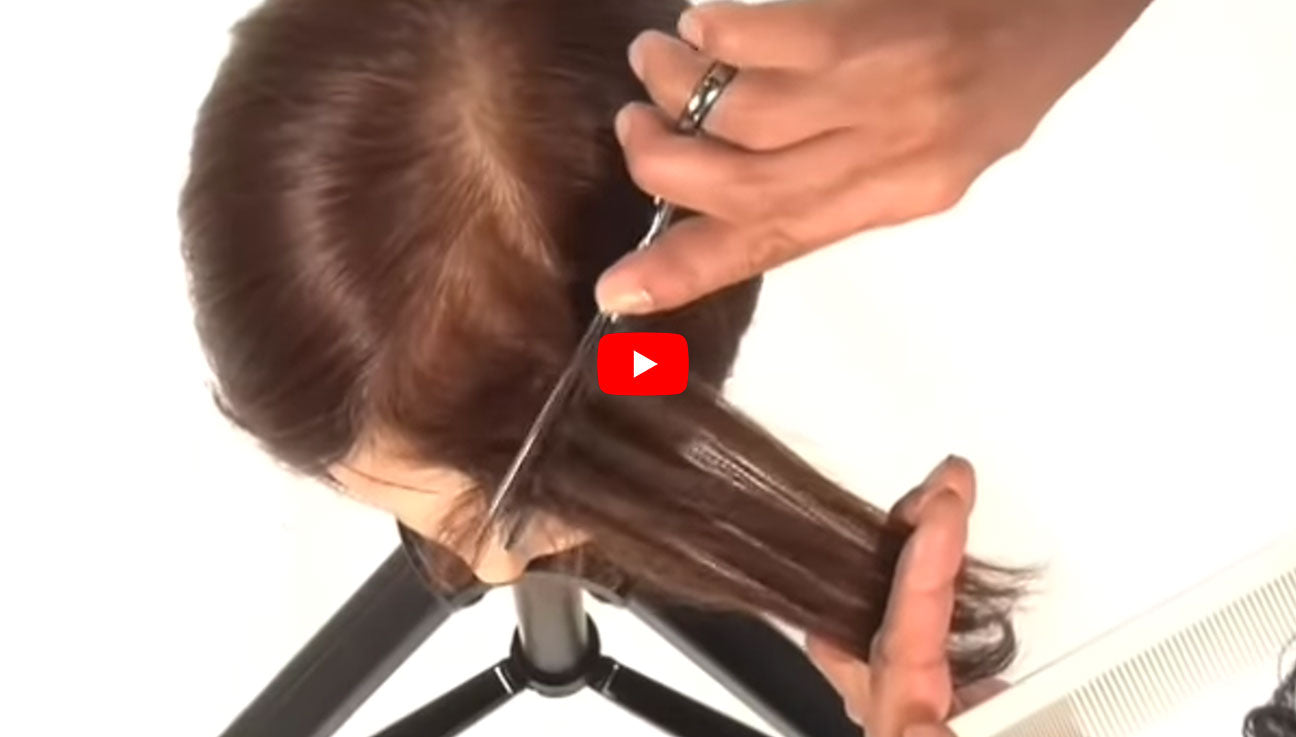
Best for: controlling the face frame area and adding volume, ideal for clients who want length in front but need the hair to move back and away from the face.
Tools needed: Reversible Blending Shear + long cutting comb
Step 1: Take and elevate your section
Take a diagonal forward slice, over-direct toward you, and elevate the section to set up the angle for precise, directional weight removal.
Step 2: Position the blending shears
Place the blunt blade on the bottom at a slight diagonal. This angle makes the section shorter on top and longer underneath, directing the hair back and away from the face.
Step 3: Weave into the section
Weave the blunt blade through the section, just as you would when highlighting hair, to selectively remove weight without creating hard lines.
Step 4: Execute the backstroke
Close the shear and push it toward the base. Without removing it from the section, open, close, and repeat the backstroke on that same placement — opening and closing on the same spot until you've worked through the full diagonal slice. Do not comb through until finished.
Step 5: Check the result
Run your fingers through the section. Length is maintained with extracted weight, and the hair naturally moves back away from the face. This technique also builds volume at the crown while preserving the look of a one-length cut.
How to Cut Length With Your Blending Shear
Discover how using a blending shear to cut the perimeter of a bob haircut will create a perfect soft edge that is pliable and is easy to grow out and maintain.
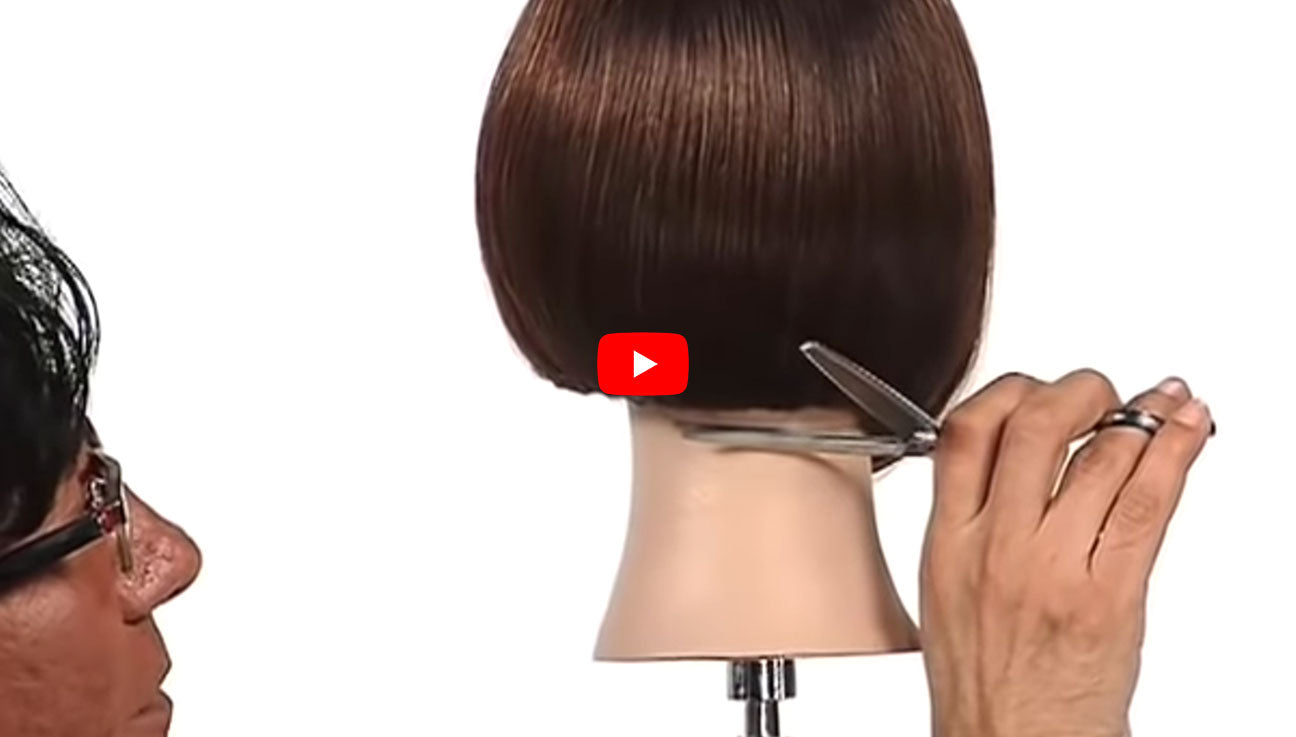
Best for: creating a strong perimeter with a soft, diffused edge — ideal for bob haircuts that need to look polished but remain pliable and easy to grow out.
Tools needed: Reversible Blending Shear + long cutting comb
Step 1: Establish your section and elevation
Support sections at a low elevation to ensure less weight removal and maintain the integrity of the perimeter line. Use the wide teeth of the cutting comb for minimal tension when working at this elevation.
Step 2: Set blade position intentionally
Approach the section and move into it with the teeth of the blending shear facing the direction you want the hair to be influenced, the hair will follow where the teeth are pointing. This is the key distinction between a blending shear and a blunt shear at the perimeter.
Step 3: Remove length by opening and closing the blade
Determine the amount of length to be removed and cut the line by simply opening and closing the blade. The toothed blade removes length while the blunt blade preserves the natural fall, creating a diffused rather than a hard line.
Step 4: Work through the perimeter consistently
Continue across the perimeter maintaining the same elevation, blade angle, and finger position. Using blending shears to cut the perimeter of a bob creates a perfect soft edge that is pliable and easy to grow out and maintain, a result a blunt shear simply cannot replicate.
Step 5: Check the line and refine
Verify that the perimeter delivers both a strong foundation and soft texture. If any areas feel too heavy, a single pass with the blending shear along those sections is all it takes to even out the weight distribution.
What Makes Sam Villa Blending Shears Different?
Signature Series Reversible Blending Shear
This shear features a 42-tooth radial pattern that eliminates blunt lines and is perfect for extracting weight and adding controlled texture to hair. Use this shear for shear over comb, when cutting perimeter length and you want soft ends (awesome for your bobs!) and any other time you want to add texture or remove length.
Signature Series InvisiBlend Shear
Extract weight without leaving any visible lines! Our 23-tooth InvisiBlend Shear is perfect for point cutting and slide cutting with zero drag or pull! Because of the dual finger rests, this shear can also be flipped for reversible cutting positions – placing your body in a more comfortable cutting position. This shear is a favorite for anyone looking to seamlessly blend hair extensions! Log in to view professional prices.
Essential Series Reversible Blender
This 30-tooth reversible blending shear was designed for ergonomic comfort and precision control. Eliminate blunt lines, extract weight and control texture. The wider spacing of the teeth makes this shear more forgiving, great for 1st time blenders and those looking to extract minimal weight. You can use this shear for shear over comb and when you desire to eliminate hard/blunt lines in the hair. Log in to view professional prices.
FAQ: How to Use Blending Shears
How to use blending shears effectively in a haircut?
To use blending shears effectively, focus on refining the haircut rather than removing bulk aggressively. Work in small, controlled sections and use minimal pressure to soften transitions and enhance flow. This technique is ideal for polishing the final shape and creating a more natural-looking finish.
What is the difference between blending shears vs thinning shears?
The difference between blending shears vs thinning shears comes down to how much hair is removed and the level of control. Blending shears, with one straight blade and one toothed blade, allow for precise, subtle texturizing. Thinning shears remove more hair with each pass, which can be useful but also increases the risk of over-thinning.
What does “cutting blend” mean and how is it used in hairstyling?
“Cutting blend” refers to techniques used to integrate sections of a haircut so there are no visible lines or disconnections. It plays a key role in achieving a cohesive shape, especially when working with layered or textured styles. Blend cutting is especially useful after the initial shape is established, helping refine the overall look and improve movement without altering the structure.
How to use blending shears without removing too much hair?
When learning how to use blending shears, avoid overworking the same area. Make a single pass, then reassess before continuing. Keeping the shear at the right angle and working with intention will help maintain density while still achieving a soft, diffused result.
When should you choose blending shears instead of other cutting tools?
Blending shears are the right choice when the goal is to refine, not reshape. Use them to soften edges, reduce heaviness in targeted areas, and enhance texture without changing the overall design of the haircut.